Stretch film optimisation is about getting the best possible packaging performance from every roll of film.
For businesses wrapping hundreds or thousands of pallets every month, even small differences in film consumption can have a noticeable effect on operating costs. Using too much film increases material consumption while using too little can compromise load containment. Neither outcome is ideal.
The challenge is finding the right balance with stretch film optimisation.
Effective stretch film optimisation looks at more than the film itself. Film specification, pallet configuration, wrapping equipment, machine settings, application methods and operator practices all influence how much material is required to secure a load.
At Taigan M-Stretch, the approach is centred on the principle of Less Plastic. More Performance. Rather than simply supplying stretch film, Taigan looks at the complete wrapping operation to identify opportunities to reduce unnecessary material use while maintaining the performance required by the load.
What is stretch film optimisation?
Stretch film optimisation is the process of reviewing and improving how stretch film is selected, applied and consumed within a packaging operation.
The objective is not simply to use less film.
The objective is to use the right amount of film for the application while achieving the required load stability and protection.
This distinction is important.
A pallet that uses very little film but arrives at its destination unstable has not been optimised.
Likewise, a pallet that is extremely secure but uses considerably more film than necessary may not represent an efficient packaging process.
Stretch film optimisation means finding the point where film consumption and packaging performance work together.
Why businesses use more stretch film than necessary
Excessive film consumption does not always happen intentionally.
It can develop gradually through everyday packaging practices.
An operator may add extra wraps because a pallet looks unstable. Machine settings may have been established years ago and never reviewed. Different pallet types may all be wrapped using the same programme even though their requirements differ.
Other factors can include:
- Incorrect film selection
- Inappropriate machine settings
- Inconsistent wrapping techniques
- Excessive overlap
- Too many rotations
- Incorrect film tension
- Poor pallet configuration
- Lack of operator training
- Changes in production without changes to wrapping settings
- Film being applied without measuring actual consumption
Over time these small inefficiencies can add up.
The first step is measuring what you use
You cannot optimise what you do not measure.
Before changing the wrapping process it is useful to establish a clear baseline.
This means understanding how much stretch film is currently being used for each pallet or each defined load type.
A business may already know how many rolls it purchases each month but that does not necessarily tell the full story.
A more useful measurement is the amount of film consumed per pallet.
For example, if two production lines use the same film but one consistently consumes more material per pallet then there is a reason worth investigating.
The difference could be caused by machine settings, pallet configuration, film application or the type of load being wrapped.
Once consumption is measured the optimisation process can become much more targeted.
Why cost per pallet matters
Stretch film is an ongoing packaging expense.
Looking only at the price of a roll can make it difficult to understand the true cost of the wrapping process.
A film that costs more per roll may provide better yield and require less material per pallet.
Conversely, a cheaper film may require more material to achieve the same result.
For this reason cost per pallet can be more useful than cost per roll when comparing packaging performance.
Businesses should consider:
- Film cost per roll
- Film length
- Film weight
- Film consumption per pallet
- Number of pallets wrapped
- Film waste
- Film breaks
- Labour involved in wrapping
- Load stability
The goal is to understand what the packaging process actually costs rather than relying on the purchase price of the film alone.
Film specification plays a major role
Not all stretch films perform in exactly the same way.
Film thickness, construction, stretch characteristics and mechanical performance can influence how the material behaves during wrapping.
A film that is well suited to one application may not be ideal for another.
This is why choosing film based solely on thickness or price can be misleading.
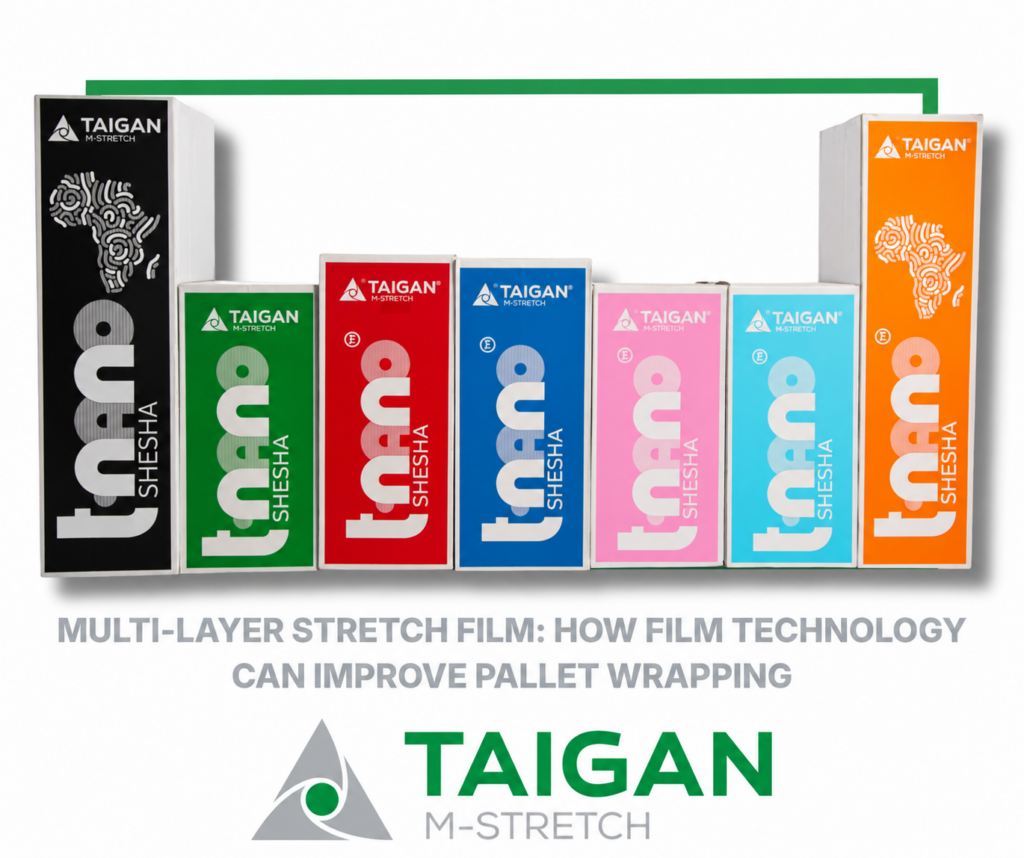
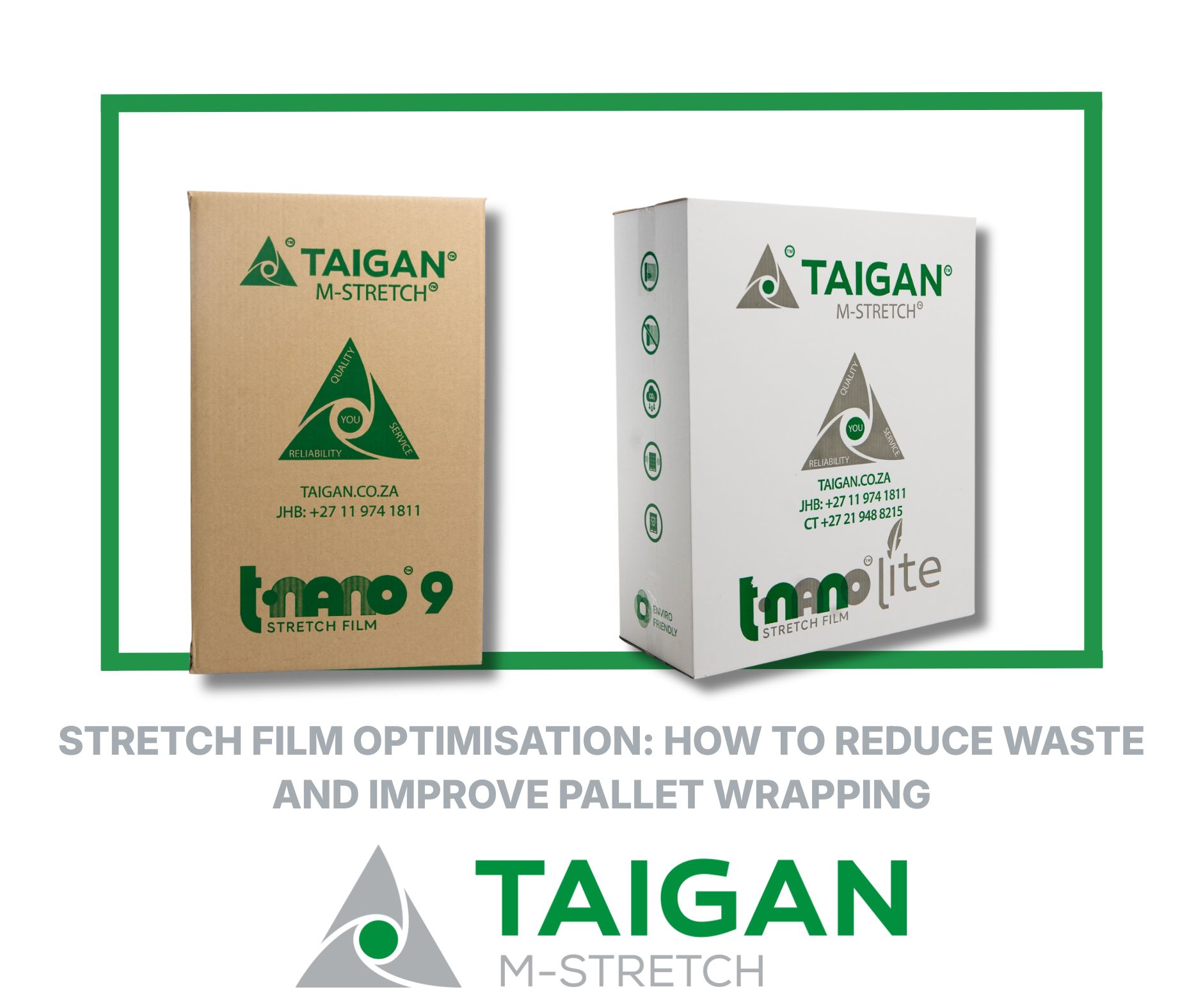
Taigan’s t.nano range uses advanced multi-layer cast stretch film technology designed for high-performance wrapping applications.
The t.nano SHESHA range is developed to support load containment, wrapping consistency, reduced film consumption and efficiency across machine and hand wrapping applications.
The right film can provide an opportunity to improve yield but it still needs to be applied correctly.
More layers do not automatically mean more film
Modern multi-layer film technology can allow manufacturers to engineer different characteristics into a single stretch film.
The objective is to create a film that delivers the necessary combination of strength, stretchability and containment without relying simply on greater thickness.
This can create opportunities for material efficiency.
However, the film still needs to be matched to the application.
A demanding industrial load may have very different requirements from a light retail pallet.
Optimisation therefore starts with understanding the load rather than automatically choosing the thinnest available film.
Machine settings can change film consumption, big step into stretch film optimisation
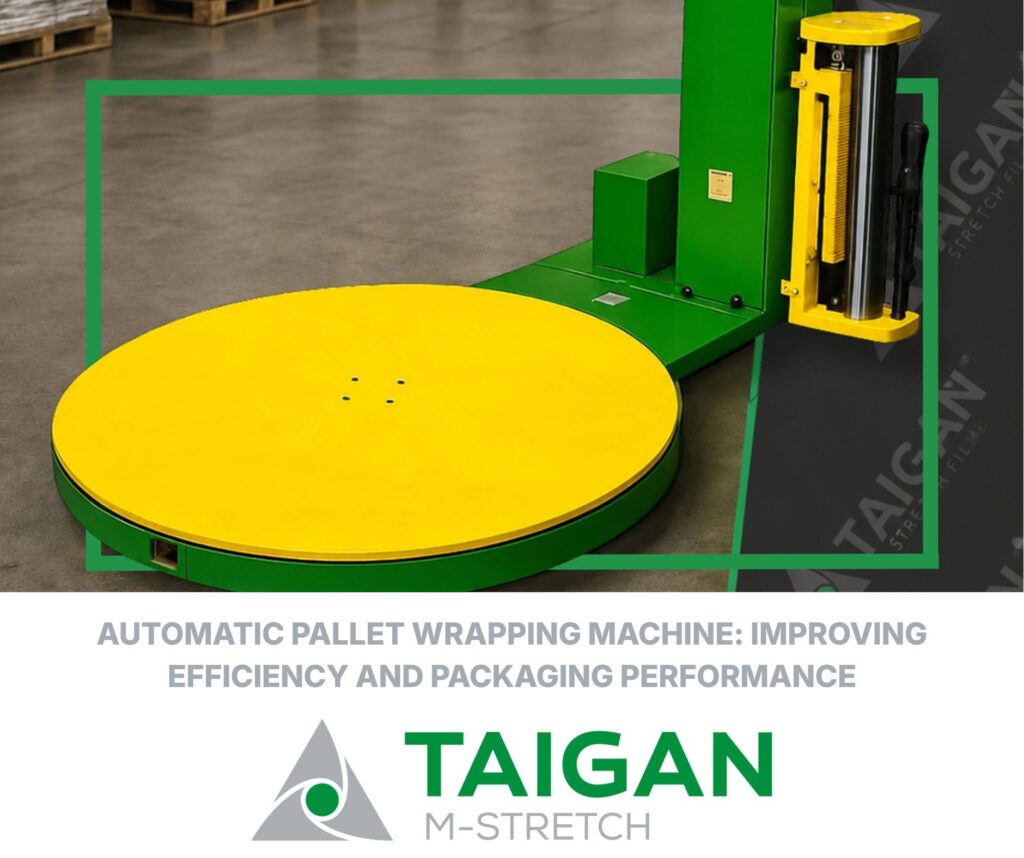
For machine-wrapped pallets, the wrapping equipment plays a major role in stretch film optimisation.
Settings can influence:
- Film stretch
- Film tension
- Number of wraps
- Wrapping speed
- Overlap
- Top and bottom wrap patterns
- Film application
- Cycle settings
Changing a setting without measuring the result can create new problems.
For example, reducing the number of wraps may lower film consumption but could also reduce load containment if the application is not assessed properly.
The better approach is to make controlled changes and measure the result.
The difference between stretch film optimisation and film waste
These terms are sometimes treated as the same thing but they are not.
Film usage refers to the material intentionally applied to a pallet.
Film waste can include material lost through:
- Film breaks
- Incorrect cutting
- Damaged rolls
- Poor machine threading
- Excessive tails
- Incorrect application
- Discarded film
- Failed wrapping cycles
Reducing waste therefore requires looking at the entire wrapping process.
A business may have relatively efficient film usage but still lose material through frequent film breaks or poor handling.
Film breaks are a useful warning sign
Frequent film breaks can indicate that something within the wrapping process needs attention.
The cause may be related to:
- Film specification
- Excessive tension
- Sharp pallet edges
- Load configuration
- Machine settings
- Film handling
- Damaged rolls
Simply increasing the amount of film applied is not necessarily the solution.
If a machine is repeatedly breaking film then adding more wraps may increase consumption without addressing the underlying problem.
A proper assessment can help identify why the film is failing.
Pallet configuration affects stretch film optimisation
Stretch film is not the only factor affecting pallet stability.
The way products are arranged on the pallet can influence how much film is required.
Irregular loads may need a different wrapping strategy from uniform cartons.
Products that extend beyond the pallet edge can create additional challenges. Gaps between boxes can also affect how the load behaves during handling.
Before increasing film consumption it can therefore be useful to assess the pallet itself.
Sometimes improving the load configuration can reduce the amount of film needed to achieve the same level of containment.
Load stability should always come first
stretch film optimisation consumption is not worthwhile if it compromises the load.
A pallet needs to remain stable during the stages it will experience after wrapping.
These may include:
- Forklift handling
- Warehouse movement
- Loading
- Transport
- Unloading
- Storage
- Distribution
The required level of containment depends on the application.
A pallet travelling a short distance within a controlled warehouse environment may have different requirements from one travelling hundreds of kilometres through multiple handling points.
Optimisation therefore needs to consider the complete journey of the load.
How yield testing can help with stretch film optimisation
Yield testing provides a practical way to compare film performance in stretch film optimisation.
Instead of judging a film based on appearance or roll size businesses can assess how much usable wrapping material they receive and how that material performs on their pallets.
Yield testing can help answer questions with stretch film optimisation such as:
- How much film is being used per pallet?
- How many pallets can be wrapped from a roll?
- Is the film being stretched effectively?
- Are different films producing different consumption levels?
- Is the current wrapping programme using more film than necessary?
This type of information makes packaging decisions and stretch film optimisation more measurable.
The role of packaging audits in stretch film optimisation
A packaging audit takes the same principle further by looking at the complete operation.
The assessment can consider the film, machinery, wrapping process, pallet configuration and operator practices.
For example, an audit may reveal that the film itself is performing well but the machine is applying excessive material.
Another operation may have suitable equipment but be using a film that is not well matched to the application.
A third may have efficient machinery but inconsistent manual wrapping practices.
The value of an audit is that it looks for the actual cause rather than assuming that one product or one machine is responsible.
Operator training in stretch film optimisation matters
Even the best packaging equipment can perform poorly if the people using it do not understand the process.
Manual wrapping in particular can vary significantly between operators.
One person may wrap a pallet tightly while another uses less tension. Some operators may add extra layers because they are concerned about stability.
Training can establish more consistent wrapping practices.
Taigan provides hands-on training to help customers understand how to palletise and wrap products for safety, stability and cost efficiency with stretch film optimisation.
The objective is not simply to teach someone how to wrap a pallet.
It is to help them understand why the wrapping process is configured in a particular way.
Stretch film optimisation for hand wrapping
Not every business needs a fully automated wrapping line.
Hand wrapping remains appropriate for many applications.
However, manual wrapping can make stretch film optimisation more difficult to achieve.
Taigan’s t.nano hand wrappers use pre-stretch and folded-edge technology. The range incorporates 30% post-consumer recycled content.
Pre-stretch technology can make it easier to apply film consistently while helping operators get more from the material.
The correct application still matters.
A hand wrapper should be used according to the requirements of the film and the load rather than simply applying as much tension as possible.
Stretch film optimisation for machine wrapping

Machine wrapping creates additional opportunities for control.
Once the machine settings have been established the wrapping process can be repeated consistently.
This makes it easier to measure changes in stretch film optimisation.
A business can compare film consumption before and after adjusting a machine setting and determine whether the change has improved the process.
This creates a cycle of continuous improvement:
Measure → adjust → test → compare → optimise.
Rather than making a permanent change based on an assumption the business can make decisions using actual performance data.
Data-driven packaging stretch film optimisation
Packaging operations can generate valuable information.
Monitoring and analytics can help businesses understand how machines and stretch film optimisation processes are performing.
Taigan’s approach includes remote monitoring, analytics, audits and machine optimisation.
This can help move packaging management away from guesswork.
For example, if a machine is consistently consuming more film on one production line than another the data can highlight the difference.
The next step is to investigate why.
It may be a machine setting. It may be the pallet configuration. It may be the film or a difference in the wrapping programme.
The data identifies where to look.
What should you measure?
A useful optimisation programme does not need to measure everything at once.
Start with the metrics that directly affect packaging performance.
Useful measurements include:
Film consumption per pallet
This is one of the most important baseline measurements.
Film cost per pallet
This translates material usage into a figure that is easier to connect to operational costs.
Pallets wrapped per roll
This can provide a practical indication of film yield.
Film breaks
Frequent breaks may indicate an issue with film selection, application or equipment settings.
Wrapping cycle time
This can show whether the packaging process is creating a bottleneck.
Load stability
Material savings should never be considered separately from the performance of the finished pallet.
Machine downtime
Equipment availability can have a direct effect on productivity.
How to start a stretch film optimisation project
Businesses do not need to overhaul their entire packaging operation overnight.
A structured approach is often more effective.
Step 1: Establish a baseline
Measure current film consumption and packaging performance.
Step 2: Identify the biggest cost or performance issue
Look for the area where improvement could have the greatest impact.
Step 3: Review the film
Assess whether the current film is appropriate for the load and wrapping equipment.
Step 4: Review machine settings
Check whether the equipment is applying the correct amount of film.
Step 5: Assess pallet configuration
Look for load characteristics that may be affecting stability.
Step 6: Train operators
Make sure employees understand the wrapping process and its purpose.
Step 7: Test changes
Make controlled adjustments rather than changing everything at once.
Step 8: Measure the results
Compare the new process against the original baseline.
Step 9: Continue monitoring
Optimisation should be ongoing rather than a once-off project.
Common mistakes to avoid in stretch film optimisation

Choosing film based only on price
A cheaper roll does not necessarily mean a lower packaging cost.
Yield and performance need to be considered.
Using the same settings for every pallet
Different loads can have different containment requirements.
Adding more film when a pallet is unstable
The cause may be the load configuration or wrapping settings rather than insufficient film.
Ignoring machine maintenance
Equipment problems can affect both film consumption and wrapping consistency.
Failing to measure results
Without data it is difficult to know whether a change has actually improved performance.
Assuming thinner always means better
Film reduction should never come at the expense of load stability.
The connection between stretch film optimisation and sustainability
Reducing unnecessary stretch film consumption can contribute to a more efficient use of packaging materials.
This is where Taigan’s Less Plastic is Best philosophy becomes practical.
The focus is not simply on using less plastic regardless of the outcome.
It is about avoiding unnecessary material while maintaining the performance needed to protect and contain the load.
For businesses wrapping large volumes of pallets the difference can become significant over time.
Less material per pallet can mean fewer rolls consumed, lower material costs and less packaging waste.
The key is ensuring that any reduction is based on measured performance.
Core Swop and responsible material management
Film optimisation can also extend beyond how much material is applied to each pallet.
Packaging operations generate other material considerations such as used cores.
Taigan’s Core Swop Program provides a structured way for customers to return used green cores.
The programme is part of Taigan’s wider approach to managing packaging materials and reducing unnecessary waste within customer operations.
This complements film optimisation by looking beyond the amount of film used and considering what happens to packaging components after use.
Stretch film optimisation is not a once-off exercise
Packaging requirements change.
A business may introduce new products, change pallet sizes, increase production or install new equipment.
Each change can affect the wrapping process.
For this reason a film specification that worked well several years ago may not necessarily remain the best solution today.
Regular reviews can identify opportunities to improve performance as the operation changes.
This is particularly important for businesses with high pallet volumes where small changes can have a large cumulative effect.
The value of combining film and machinery expertise
Film suppliers and machinery suppliers are often treated as separate parts of the packaging process.
In practice they are closely connected.
The film needs to perform correctly through the machine. The machine needs to apply the film correctly. The pallet needs to be configured appropriately and the wrapping programme needs to match the load.
Taigan combines these areas through its film technology, Machine Division and technical support.
This allows the packaging operation to be considered as a complete system.
From reducing film to improving the whole process with stretch film optimisation

The biggest opportunity may not always be the stretch film itself.
A business could reduce its film consumption but still have an inefficient packaging operation if employees spend excessive time moving pallets or machines experience frequent downtime.
This is why stretch film optimisation should be viewed within the wider packaging process.
Improving film yield is one part of the picture.
Improving machine performance, reducing downtime, training operators and improving pallet configuration can all contribute to a more efficient operation.
The best results come when these factors are considered together.
A smarter approach to stretch film
Stretch film optimisation is ultimately about making informed decisions.
Instead of asking how little film can be used the better question is:
How can we achieve the required pallet performance using the appropriate amount of film?
That requires measurement.
It requires understanding the load.
It requires selecting the right film and using the wrapping equipment correctly.
It also requires reviewing the process when production changes.
Taigan’s approach combines advanced film technology with packaging audits, yield testing, machine optimisation, training and technical support to help businesses improve the way they wrap.
For a high-volume packaging operation the result can be more than reduced film consumption. It can mean better consistency, improved load stability, greater productivity and stronger control over packaging costs.
Start optimising your stretch film usage
If your business is using large quantities of stretch film but does not have a clear picture of how much is required per pallet, a packaging assessment can be a useful starting point.
Taigan can assess the wrapping process and look at the relationship between film, machinery, load configuration and operator practices.
The objective is not to recommend more packaging.
It is to determine where packaging can be used more effectively.
With the right data and the right approach, businesses can move from simply purchasing stretch film to actively managing packaging performance.
Less plastic. More performance. Better control.