When businesses move large quantities of products through manufacturing facilities, warehouses and distribution centres, packaging needs to do more than simply cover a pallet. It needs to help keep products secure, support efficient handling and perform consistently throughout the supply chain.
This is where industrial stretch film becomes an important part of the packaging process.
Industrial stretch film is designed for demanding pallet wrapping applications where strength, stretchability and load containment are important. It can be applied manually or with wrapping equipment depending on the requirements of the operation.
However, selecting the right film is only one part of achieving good packaging performance. The type of load, wrapping method, equipment and application technique can all affect the final result.
For businesses using large volumes of stretch film, understanding these factors can create opportunities to improve packaging efficiency while maintaining the stability and protection required during storage and transportation.
What Is Industrial Stretch Film?
Industrial stretch film is a stretchable plastic film used primarily to secure products and palletised loads.
The film is wrapped around the products under tension. As it stretches around the load, it creates containment that helps hold individual products together.
This makes it particularly useful for businesses operating in:
- Manufacturing
- Warehousing
- Distribution
- Logistics
- Export
- Retail supply chains
- Production environments
The film can be supplied in different constructions and specifications depending on the application.
Modern cast stretch film technology allows manufacturers to develop films with specific performance characteristics while maintaining the flexibility required for pallet wrapping.
Why Is Stretch Film Important?
A pallet may be handled many times before reaching its final destination.
Products can move from a production line to a warehouse before being loaded onto a vehicle. They may then travel to a distribution centre and eventually be delivered to a customer.
During this journey, the pallet can experience:
- Forklift handling
- Vibration
- Acceleration
- Braking
- Loading and unloading
- Warehouse movement
If products are not adequately contained, they may shift during these processes.
Stretch film helps bring the individual products together as a single unit and contributes to overall load stability.
Industrial Stretch Film and Load Stability
One of the most important considerations when choosing stretch film is load stability.
A stable pallet is easier to handle and can provide greater confidence throughout transportation.
However, load stability does not depend on film alone.
It can also be influenced by:
- Product arrangement
- Pallet quality
- Load dimensions
- Product weight
- Wrapping pattern
- Film properties
- Application method
- Wrapping equipment
This is why businesses should consider the entire packaging process rather than simply selecting the cheapest available film.
Choosing the Right Film for the Application
There is no universal stretch film that is automatically suitable for every pallet.
A warehouse handling lightweight cartons may have very different requirements from a manufacturing facility transporting heavier or irregularly shaped products.
Before selecting a film, businesses should consider:
Load Characteristics
What are the products being wrapped?
Are they heavy, lightweight, uniform or irregular?
Pallet Configuration
How are the products positioned on the pallet?
Are there gaps or uneven sections?
Wrapping Method
Will the film be applied manually or using machinery?
Transport Conditions
How far will the pallet travel and how will it be handled?
Film Consumption
How much film is currently being used per pallet?
These questions provide a better foundation for selecting an appropriate packaging solution.
Cast Stretch Film for Industrial Applications
Cast stretch film is manufactured through a cast extrusion process.
This allows manufacturers to produce film with controlled characteristics and consistent performance.
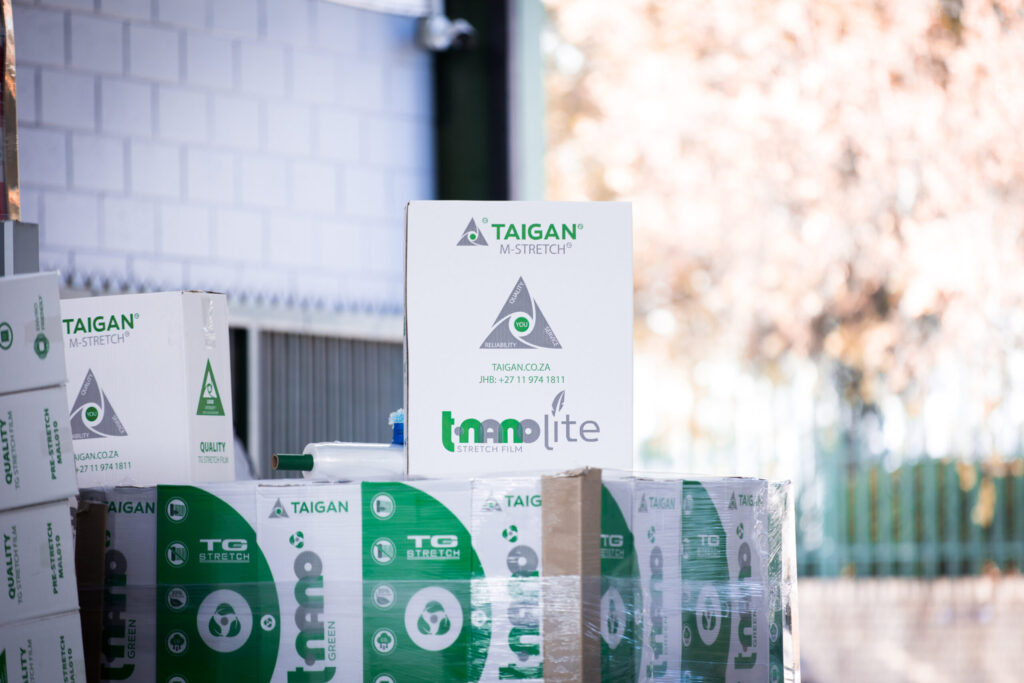
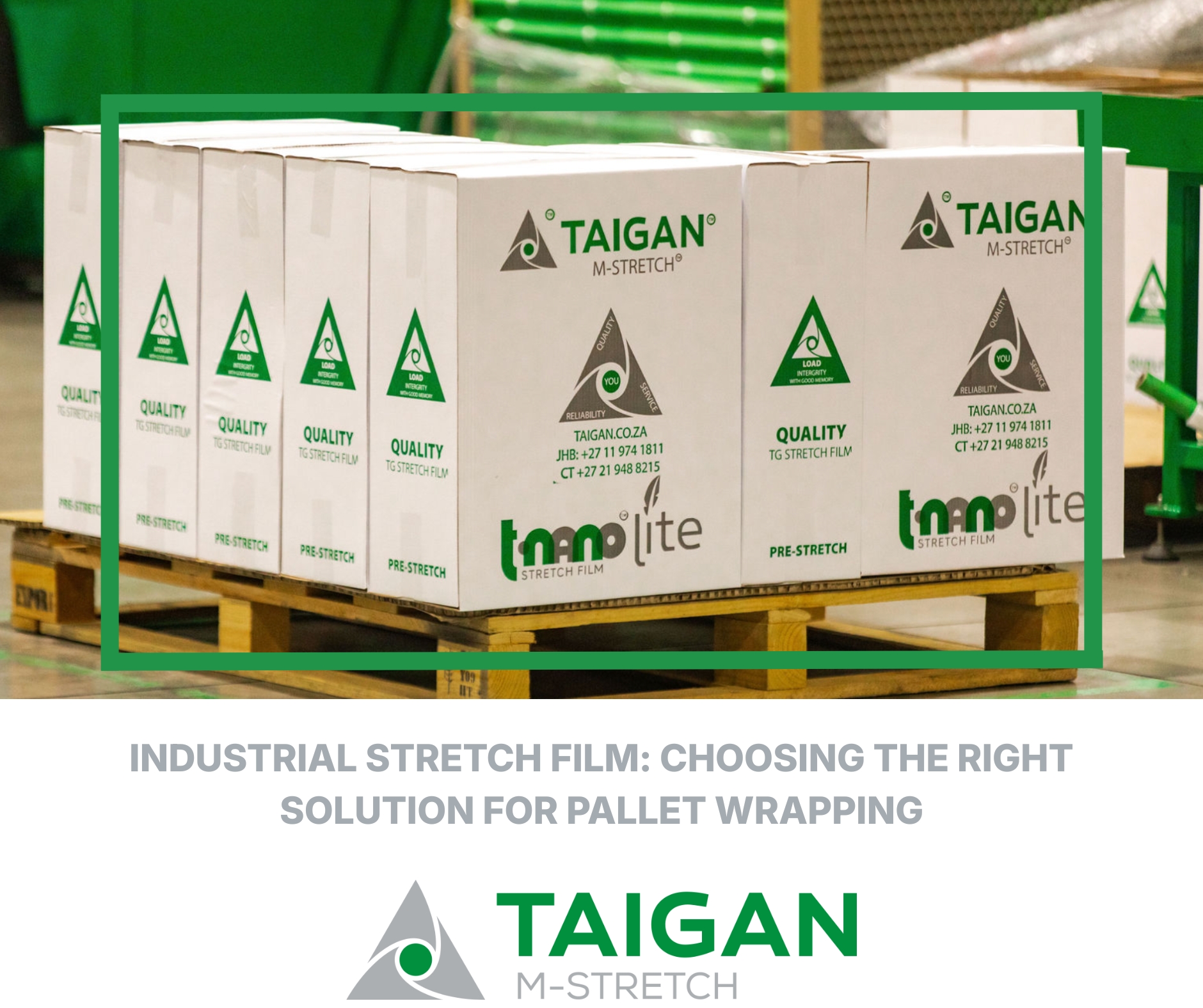
Taigan M-Stretch’s t.nano range includes 33-layer, 55-layer and 67-layer cast stretch film.
The multi-layer construction is designed to provide a combination of strength, stretchability and load containment for different packaging applications.
The range includes products for hand wrapping as well as machine wrapping.
Why Multi-Layer Film Technology Matters
Modern stretch film technology has developed considerably.
Rather than relying on a simple single-layer structure, multi-layer cast extrusion allows different characteristics to be engineered into the film.
This can contribute to:
- Strength
- Stretch performance
- Puncture resistance
- Load retention
- Consistent application
The exact performance required will depend on the application.
This is why businesses should assess their actual packaging needs before selecting a film.
Industrial Stretch Film for Machine Wrapping
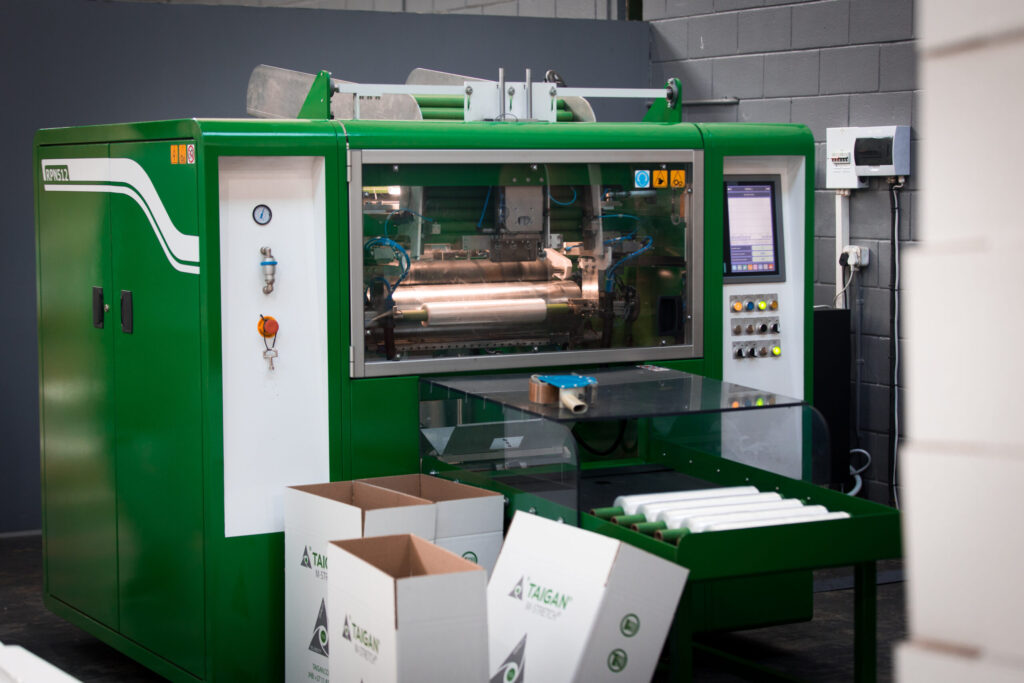
High-volume operations often use semi-automatic or automated wrapping equipment.
Machine wrapping can provide a more consistent application than manual wrapping because the equipment controls elements of the wrapping process.
This can be particularly useful where businesses wrap large numbers of pallets.
Taigan M-Stretch’s t.nano machine rolls are designed for semi-automatic and automated machine lines.
The combination of appropriate machine settings and suitable film can help businesses achieve repeatable wrapping performance.
Industrial Stretch Film for Manual Wrapping
Not every business requires automated equipment.
Manual wrapping remains practical for many applications where pallet volumes are lower or loads vary significantly.
t.nano hand wrappers are designed for manual wrapping applications.
The important consideration is ensuring that operators understand how to use the film correctly.
Even a high-performance film can produce inconsistent results if it is not applied appropriately.
Why Operator Training Matters
Packaging performance depends partly on the person applying the film.
Manual wrapping can vary significantly between operators.
One operator may apply more film than necessary while another may not provide enough containment. These differences can affect both packaging costs and load stability.
Training helps create a more consistent approach.
Operators can learn:
- How to apply film effectively
- How to approach different loads
- How to avoid excessive film usage
- How to identify packaging problems
- How to maintain consistent wrapping practices
For businesses wrapping large numbers of pallets, consistency can have a significant operational impact.
More Film Does Not Automatically Mean Better Protection
It is easy to assume that using more stretch film will create a stronger pallet.
However, excessive film usage can increase packaging costs without necessarily providing a proportional improvement in load stability.
At the same time, reducing film too aggressively can compromise containment.
The objective should be to determine the appropriate amount of film for the application.
This is where packaging optimisation and testing become valuable.
What Is Packaging Optimisation?
Packaging optimisation involves improving the complete packaging process.
For pallet wrapping, this can include:
- Film selection
- Film consumption
- Wrapping technique
- Equipment settings
- Load configuration
- Operator training
- Finished pallet performance
The goal is to achieve the required level of protection while making efficient use of packaging materials.
This approach is more useful than simply trying to reduce the amount of film used.
The Importance of Yield Testing
Yield testing can help businesses understand their actual film consumption.
Instead of estimating how much film is being used, businesses can measure the material applied to individual pallets and compare it with the resulting load stability.
This can reveal opportunities for improvement.
For example, if two production areas are wrapping similar pallets but one uses significantly more film, the difference may indicate an opportunity to review the wrapping process.
Packaging Assessments
A packaging assessment looks at the complete application.
It may involve examining:
- The product
- Pallet configuration
- Film selection
- Wrapping equipment
- Wrapping pattern
- Film consumption
- Load stability
The purpose is to understand what is happening rather than simply recommend a different product.
Sometimes the existing film is appropriate but the application method needs improvement.
In other cases, the film may not be well suited to the load.
A proper assessment can help identify the difference.
Industrial Stretch Film and Packaging Costs
For businesses wrapping hundreds or thousands of pallets, stretch film can become a significant operating expense.
However, the cost of packaging is not limited to the price of the film.
Businesses should also consider:
- Labour
- Wrapping time
- Film consumption
- Repacking
- Product damage
- Waste
- Handling
A film that delivers better performance can potentially provide greater overall value even if its purchase price is not the lowest.
This is why packaging decisions should be based on the total process.
Reducing Unnecessary Film Usage

Reducing unnecessary material consumption can benefit both operational efficiency and packaging costs.
However, the answer is not simply to use less film.
Instead, businesses should look at how effectively the current film is being applied.
Improving the wrapping process can help reduce excessive usage while maintaining the required load containment.
Yield testing and operator training can both contribute to this process.
The Role of Core Reuse
Packaging efficiency extends beyond the film itself.
Taigan M-Stretch has developed a core swop programme that allows used green cores to be collected and reused.
Customers can use flow bins to collect the cores which Taigan can retrieve.
This can help keep production areas more organised while extending the useful life of the cores.
It is one example of how packaging processes can be reviewed beyond the primary packaging material.
t.nano and Material Efficiency
The t.nano range includes products containing 30% post-recyclable content according to Taigan’s product information.
Taigan also states that its stretch film is recyclable.
These characteristics form part of the company’s approach to responsible packaging and material efficiency.
For businesses reviewing their packaging processes, material selection can therefore be considered alongside film consumption and wrapping performance.
What Makes a Good Industrial Stretch Film?
Businesses evaluating industrial stretch film should consider several factors.
Strength
The film needs to withstand the demands of the application.
Stretchability
The film should stretch effectively around the load.
Load Retention
The film needs to provide appropriate containment throughout handling and transportation.
Consistency
Performance should remain reliable from pallet to pallet.
Application
The film needs to be appropriate for the wrapping method.
Overall Value
The product should provide the required performance while supporting efficient packaging costs.
Looking at all these factors provides a better basis for decision-making than comparing price alone.
Common Stretch Film Problems

Businesses sometimes experience packaging problems without immediately identifying the cause.
Film Breaking
Film may break when it is not appropriate for the application or when excessive stress is placed on the material.
Unstable Loads
Insufficient containment or an unsuitable wrapping process can contribute to load movement.
Excessive Film Consumption
High usage may indicate that the wrapping process has not been optimised.
Inconsistent Results
Different operators may produce different results if there is no standardised wrapping process.
Product Movement
Poor pallet configuration can make effective wrapping more difficult.
Understanding these issues can help businesses find the right solution rather than simply adding more film.
Industrial Stretch Film and Warehouse Efficiency
Packaging can influence warehouse efficiency in several ways.
Stable pallets are easier to move and store.
Consistent wrapping processes can also make packaging requirements more predictable.
For high-volume facilities, small improvements can become significant when multiplied across hundreds or thousands of pallets.
This makes packaging optimisation worth considering as part of a wider warehouse efficiency strategy.
How to Improve Your Wrapping Process
Businesses can begin with a straightforward review.
1. Understand Your Loads
Identify the products and pallet configurations being wrapped.
2. Measure Film Usage
Determine how much film is actually used per pallet.
3. Review Application
Observe how the film is being applied.
4. Check Load Stability
Assess the finished pallets during handling and transportation.
5. Test Where Necessary
Use yield testing to establish actual performance.
6. Train Operators
Create consistent wrapping practices.
7. Review Regularly
Packaging requirements can change as operations develop.
This approach can help businesses make improvements based on evidence rather than assumptions.
Why Experience Matters When Choosing Packaging
Stretch film may look like a straightforward product but selecting the right solution can involve several variables.
An experienced packaging supplier can help businesses consider the complete application rather than simply recommending a roll of film.
Technical support can include:
- Product selection
- Packaging assessments
- Yield testing
- Training
- Application advice
- Ongoing support
This can make the process of improving packaging more structured and measurable.
Taigan M-Stretch’s Approach
Taigan M-Stretch has operated in the stretch film and packaging industry since 2005.
The company was founded around three principles known as the Triangle of Trust: Quality, Service and Reliability.
These principles remain central to its approach to customers.
Taigan’s t.nano range provides cast stretch film solutions for hand and machine wrapping applications while its technical support focuses on helping customers understand and improve their packaging processes.
Supporting Customers Across South Africa

Taigan M-Stretch has a national footprint with distribution centres in:
- Johannesburg
- Cape Town
- Mbombela
- Gqeberha
This allows the company to support customers in different regions while maintaining a focus on service and reliable supply.
For businesses using industrial stretch film across multiple sites, having access to technical and supply support can be an important consideration.
Industrial Stretch Film Is Part of a Bigger Process
The best packaging result rarely comes from the film alone.
It comes from the relationship between:
Load + Film + Equipment + Application + Operator + Process
Each element affects the final result.
A business may have excellent film but poor wrapping practices. Another may have advanced equipment but an unsuitable film.
Looking at the complete system provides a better opportunity to identify improvements.
Frequently Asked Questions
What is industrial stretch film used for?
Industrial stretch film is primarily used to secure palletised products and provide load containment during storage, handling and transportation.
Is industrial stretch film recyclable?
Stretch film is recyclable. Taigan also has initiatives focused on core reuse and material efficiency.
Can industrial stretch film be used by hand?
Yes. Depending on the product, stretch film can be designed for manual wrapping applications.
Can industrial stretch film be used on wrapping machines?
Yes. Machine-grade stretch film is designed for semi-automatic and automated wrapping equipment.
How do I know which stretch film is right for my business?
The appropriate film depends on factors such as the load, pallet configuration, wrapping method, equipment and required load stability. Packaging assessments and yield testing can help determine the most suitable approach.
Does using thinner film mean using less plastic?
Not automatically. Film thickness needs to be considered alongside strength, stretchability and the amount of film required to achieve the required load containment.
Conclusion
Industrial stretch film is an important component of modern pallet packaging.
It helps businesses secure loads for storage, handling and transportation while supporting efficient warehouse and distribution operations. However, choosing the right film is only part of the equation.
The best results come from understanding the load, selecting appropriate film, using the correct application method and training operators to achieve consistent results.
For high-volume operations, yield testing and packaging assessments can also provide valuable insight into film consumption and load performance.
Taigan M-Stretch’s t.nano range of 33-layer, 55-layer and 67-layer cast stretch film provides solutions for both hand and machine wrapping applications. Combined with technical support, training and packaging optimisation services, this gives businesses an opportunity to look beyond the product and improve the complete wrapping process.
When packaging performance matters, the goal should not simply be to use more film or choose the cheapest roll. It should be to find the right balance between load stability, film performance, material efficiency and overall packaging cost.