Automated packaging solutions are changing the way businesses approach the final stages of production. What was once a series of separate manual tasks can now become a connected process designed to improve consistency, increase throughput and make better use of time, labour and packaging materials.
For manufacturers, warehouses and distribution facilities handling a steady flow of products, the end-of-line packaging area can have a major impact on overall productivity. Pallets need to be prepared, secured, wrapped and moved efficiently before products can enter storage or distribution.
When these processes rely heavily on manual work, delays and inconsistencies can develop. Operators may have different working methods, packaging materials can be used inconsistently and equipment downtime can interrupt production.
automated packaging solutions offers another approach.
Rather than looking at individual machines in isolation, businesses can assess the entire packaging workflow and identify where technology can remove unnecessary steps, improve control and create a more consistent process.
At Taigan M-Stretch, this approach combines film technology, packaging machinery, monitoring and technical support to help businesses improve the performance of their packaging operations.
What are automated packaging solutions?
Automated packaging solutions are systems that use machinery, controls and technology to reduce or remove manual intervention from packaging processes.
The level of automated packaging solutions can vary considerably.
A business may automate a single part of its packaging process such as pallet wrapping. Another operation may integrate several end-of-line processes into a more connected system.
Depending on the application, automated packaging solutions can involve:
- Pallet wrapping
- Strapping
- Taping
- Product handling
- Conveying
- Pallet movement
- Packaging inspection
- Film application
- Machine monitoring
- Production data collection
The important point is that automated packaging solutions does not have to mean replacing every manual process.
The best solution is usually the one that addresses the actual limitations within the operation.
Why end-of-line packaging deserves more attention
Production efficiency does not stop when a product leaves the manufacturing process.
Products still need to be packaged correctly before they can be stored, transported or delivered to customers.
If the end-of-line process is slow then the rest of the operation can eventually be affected.
For example, products may accumulate while waiting for packaging. Pallets may wait to be wrapped before they can move to dispatch. Employees may spend significant amounts of time completing repetitive packaging tasks.
These problems can become more noticeable as production volumes increase.
Improving the end-of-line process can therefore create benefits that extend beyond the packaging area itself.
The difference between a machine and automated packaging solutions
Buying a machine is not necessarily the same as implementing an automated packaging solution.
A machine performs a task.
Automated packaging solutions looks at how that task fits into the wider operation.
This distinction matters.
A wrapping machine may be capable of wrapping pallets quickly but if pallets still have to be moved manually from one part of the facility to another the overall process may remain inefficient.
Likewise, a business may install automation without addressing the film being used or the way the machine is configured.
The result may be faster packaging without the material savings or consistency improvements the business expected.
A complete solution considers the equipment, materials, workflow and people together.
What can automated packaging solutions improve?
Every operation is different but automated packaging solutionscan potentially improve several areas of an end-of-line process.
Productivity
Machines can perform repetitive packaging tasks consistently without the same physical limitations as manual processes.
This can help businesses process larger volumes while reducing delays at the packaging stage.
Consistency
Manual packaging can vary between operators.
Automation creates a more repeatable process where equipment settings determine how a task is performed.
This can be particularly useful for pallet wrapping where film tension, wrapping cycles and application patterns influence the finished load.
Labour utilisation
Automated packaging solutions can reduce the amount of time employees spend performing repetitive packaging tasks.
This does not necessarily mean eliminating people from the process. Instead, employees can move towards activities where human judgement, quality control or problem-solving adds greater value.
Packaging material control
Automated packaging solutions systems can provide more consistent control over packaging materials.
For stretch film applications, this can create an opportunity to reduce unnecessary film consumption while maintaining the required load containment.
Reliability
A properly maintained automated process can help reduce variations caused by manual handling.
Preventative maintenance and technical support are also important for keeping equipment operating reliably.
Automated packaging solutions does not have to happen all at once
One of the biggest misconceptions about packaging automation is that a business needs to completely redesign its production line before automation can begin.
That is not always the case.
Automated packaging solutions can be introduced gradually.
A business might begin with a semi-automatic pallet wrapping machine. Once the process has been assessed and the benefits understood the operation could potentially progress towards a more integrated automated system.
This staged approach allows businesses to focus investment on areas where it can have the greatest effect.
It also gives employees time to become familiar with new equipment and processes.
Semi-automatic versus fully automatic systems
The appropriate level of automation depends on the operation.
Semi-automatic packaging
Semi-automatic equipment still involves some operator participation but reduces the physical work required to complete a packaging task.
This can be a practical option for businesses that have moderate pallet volumes or varying production requirements.
It can also be useful where a completely automated production line would not be justified.
Fully automatic packaging
Fully automatic systems are designed to reduce manual intervention further.
They can be integrated into production and distribution environments where pallets move through a defined process.
For high-volume operations a fully automated system may provide greater throughput and consistency.
The right choice depends on factors such as production volume, pallet flow, product characteristics, available space and existing equipment.
Packaging automation and pallet wrapping
Pallet wrapping is one of the areas where automation can make a noticeable difference.
Manual pallet wrapping requires an operator to move around the pallet while applying stretch film. The amount of film used and the way it is applied can vary.
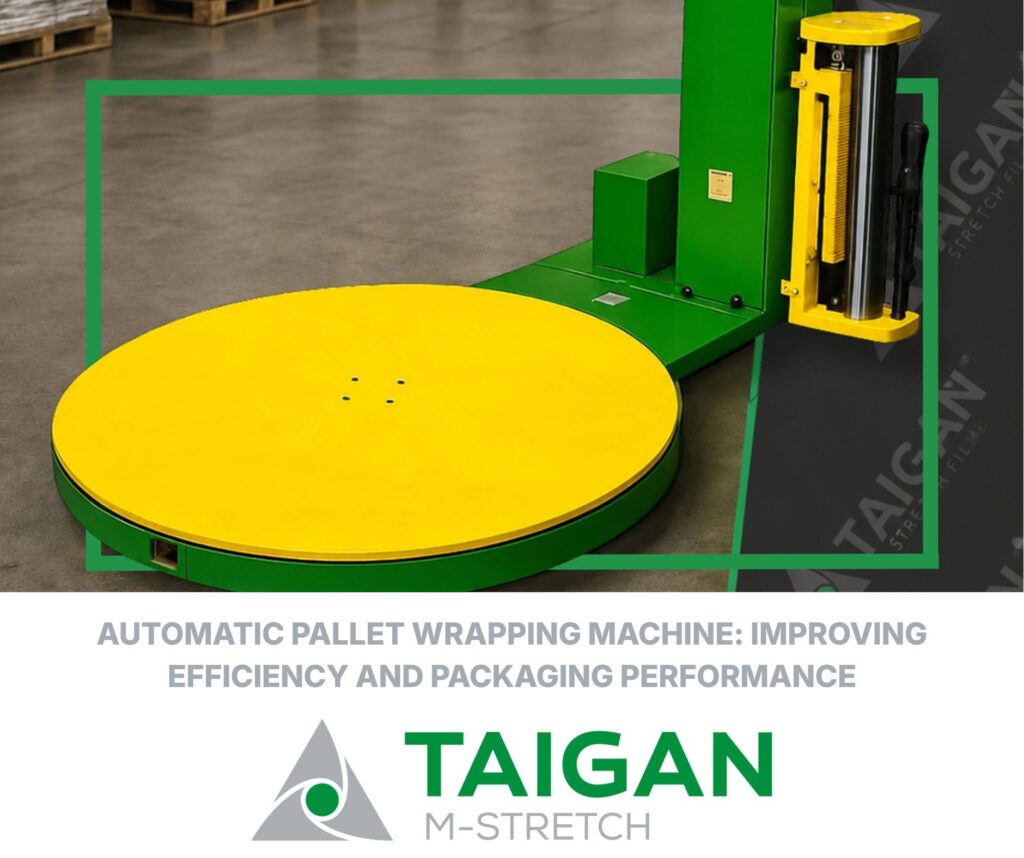
An automated wrapping machine creates a more controlled wrapping cycle.
The machine can be configured according to the requirements of the load and film. This helps establish a repeatable process across the production run.
The objective should not simply be to wrap pallets faster.
The goal is to achieve the required load stability while using the appropriate amount of packaging material.
The film still matters
Automation does not remove the importance of the packaging material.
Stretch film needs to work effectively with the equipment and the application.
A film that performs well by hand may not necessarily be the best choice for an automated system. The machine needs to be able to apply the film consistently while achieving the required containment.
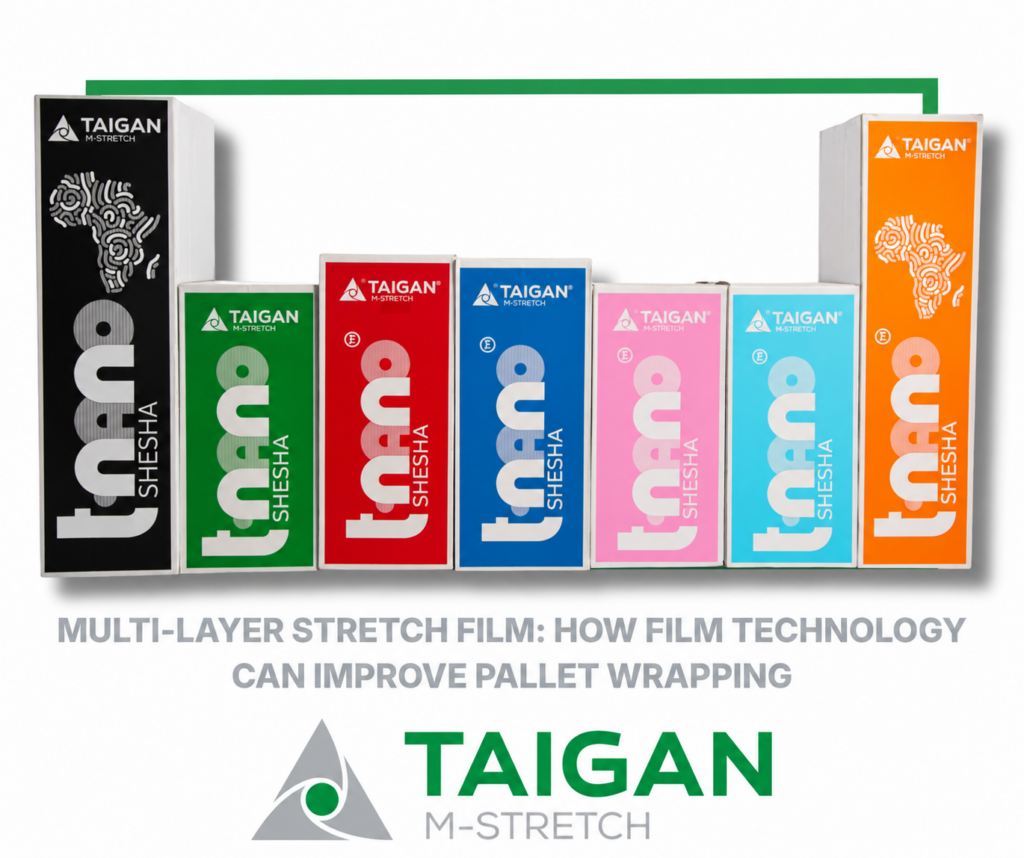
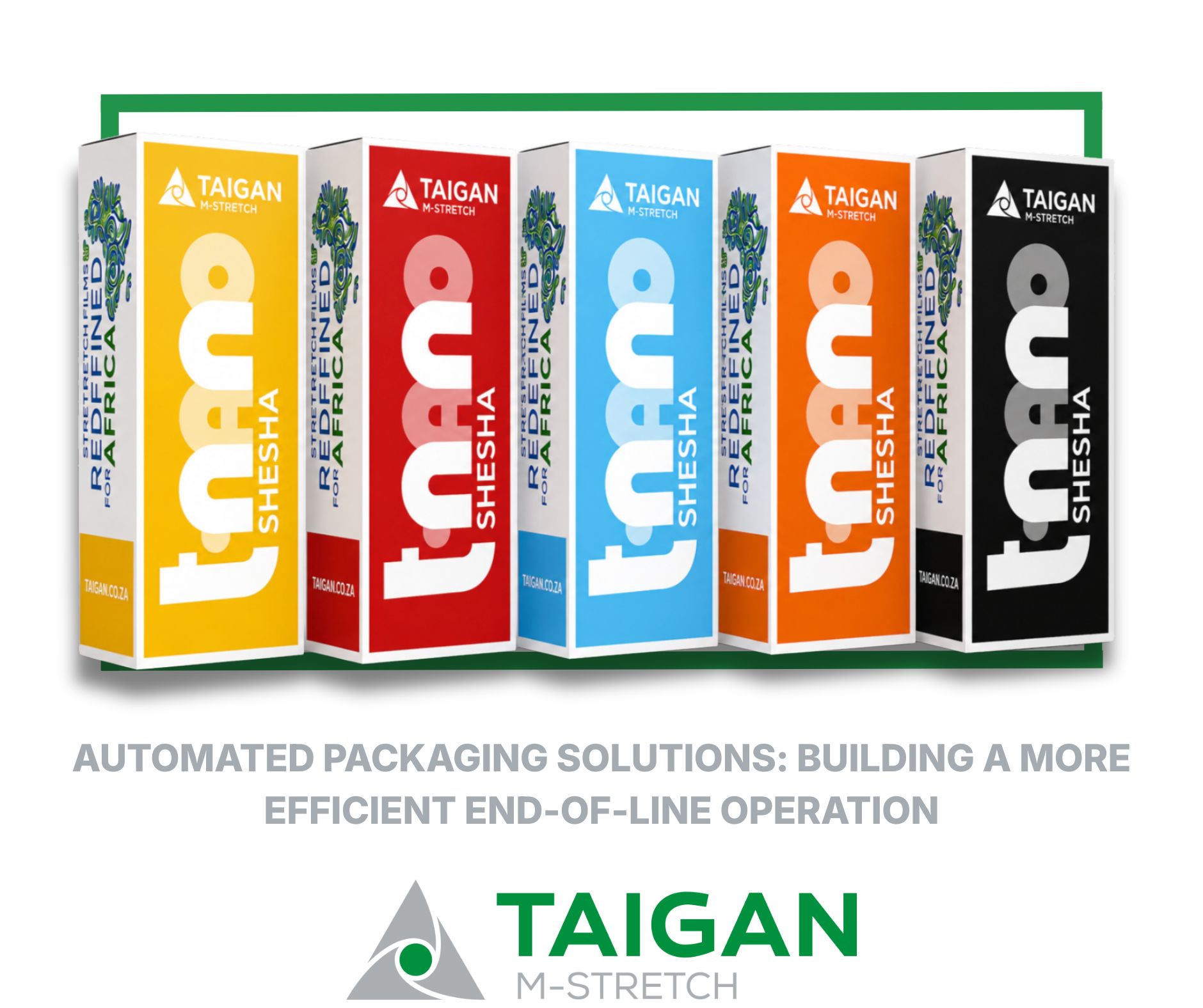
Taigan’s t.nano stretch film range is designed around high-performance pallet wrapping applications.
The t.nano SHESHA range uses advanced multi-layer cast stretch film technology with a focus on load containment, wrapping consistency, film consumption and efficiency across both machine and hand wrapping applications.
This illustrates why equipment and film should be evaluated together.
The best automated packaging solution is not simply the machine with the highest output. It is the combination of equipment and materials that delivers the required result efficiently.
Data can make automated packaging solutions smarter
Automated packaging solutions becomes even more useful when businesses can understand what is happening within the process.
Data can provide insight into machine performance, film usage, wrapping cycles and other aspects of packaging operations.
Instead of relying entirely on assumptions, businesses can use actual information to identify opportunities for improvement.
For example, data may reveal that a particular pallet type requires significantly more film than another. An audit can then investigate whether this is caused by the load configuration, film specification or machine settings.
This turns packaging optimisation into an ongoing process rather than a once-off exercise.
Taigan’s approach includes remote monitoring, analytics, audits and machine optimisation to help transform packaging data into measurable operational improvements.
Why packaging audits matter before automated packaging solutions
Automated packaging solutions should solve a problem.
Before investing in equipment it is useful to understand exactly where the current process is losing time, material or money.
A packaging workflow audit can examine the existing operation from the point where products reach the end of the production process through to the completed pallet.
Questions may include:
- How many pallets are processed per hour?
- How much time is spent on manual packaging?
- How much stretch film is used per pallet?
- Are different operators using different wrapping methods?
- How often does equipment stop?
- Are pallets stable after wrapping?
- Where do queues develop?
- How are completed pallets moved to storage or dispatch?
- Which packaging tasks create the greatest physical strain?
These answers can help determine whether automated packaging solutions is appropriate and where it should be introduced.
Automated packaging solutions can help reduce unnecessary packaging
A faster process does not automatically mean a more efficient process.
If an automated packaging solutions wrapping machine applies too much film to every pallet the business may simply be using packaging material more quickly.
This is why machine settings and film selection are important.
Taigan’s “Less Plastic is Best” philosophy focuses on achieving packaging performance without unnecessary material use.
The aim is to understand how much film is actually required for the application and then configure the wrapping process accordingly.
When equipment, film and settings are properly aligned a business can work towards better material efficiency without compromising the stability required for transport and handling.
Workplace considerations also matter
Automated packaging solutions is not only about machines and numbers.
The people working within the process need to be considered as well.
Repeated manual wrapping can involve physical movement throughout a shift. Where packaging volumes are high this can contribute to fatigue and physical strain.
Reducing repetitive manual tasks can allow employees to focus on other responsibilities.
Taigan also offers solutions such as the Bolt Applicator used with Taigan Rocket. Its fatigue-fighter design is intended to reduce physical strain during packaging activities.
A well-designed packaging system should therefore improve the working process as well as the production process.
Automated packaging solutions can support growth

A packaging process that works at one production volume may become difficult to manage when a business grows.
Hiring additional employees to perform repetitive packaging tasks may provide a short-term solution but it does not necessarily address the underlying process.
Automated packaging solutions can provide additional capacity by increasing the consistency and throughput of packaging activities.
This can be particularly valuable for businesses experiencing:
- Increasing production volumes
- Higher pallet throughput
- Growing distribution requirements
- Expanding warehouse operations
- Greater demand for consistent packaging
- Rising labour requirements
- Increasing packaging material costs
Planning automation before packaging becomes a major bottleneck can make the transition easier.
Maintenance is part of the solution
Automated packaging solutions equipment requires ongoing care.
A packaging machine that is not maintained properly can become a source of downtime rather than a solution to it.
Preventative maintenance helps identify potential problems before they develop into larger failures.
Taigan’s Machine Division provides servicing, maintenance, refurbishment, upgrades, installation and ongoing technical support for packaging equipment.
This is particularly important for businesses where packaging equipment forms part of a continuous production process.
Machine downtime can affect more than the packaging department. It can create delays throughout the wider operation.
Refurbishment can also improve automation
Automation does not always require buying completely new equipment.
Existing packaging machinery may sometimes be refurbished or upgraded to improve performance and extend its useful service life.
This can be worth considering where a business already has equipment but is experiencing reliability or performance issues.
An assessment can determine whether servicing, refurbishment, an upgrade or replacement makes the most practical sense.
The goal should be to improve the overall process rather than automatically choosing the most expensive option.
Choosing an automated packaging solution
There is no universal automation system that works for every business.
Before choosing equipment it is worth considering the following.
1. Understand your current process
Document how products move through the end-of-line area.
Look for delays, unnecessary movement and repetitive tasks.
2. Measure packaging consumption
Understand how much film and other packaging materials are currently being used.
Without a baseline it becomes difficult to measure improvement.
3. Consider future production
Equipment should be suitable for current requirements but it is also worth considering expected growth.
4. Assess your existing machinery
Determine whether existing conveyors, wrapping equipment and other systems can be integrated into the new process.
5. Consider your workforce
Identify tasks that are repetitive, physically demanding or difficult to maintain consistently.
6. Look beyond the machine
Installation, training, maintenance and technical support can be just as important as the equipment itself.
7. Establish measurable goals
Decide what success should look like.
This could include improved throughput, reduced film consumption, better load stability, less manual handling or lower packaging costs.
The role of technical support

Technology is only one part of an automated packaging solution.
Businesses also need people who understand how the technology should be applied.
Installation needs to be handled correctly. Operators need training. Equipment needs to be maintained. Film and machine settings may need adjustment as production requirements change.
Technical support provides continuity throughout this process.
Taigan combines packaging equipment with technical expertise, training, workflow audits and optimisation support to help businesses get more from their packaging systems.
Automation and measurable sustainability
For many businesses sustainability is becoming part of operational decision-making.
However, meaningful improvement requires more than replacing one product with another.
Reducing unnecessary material use can have a direct operational benefit because it can reduce packaging consumption and associated costs.
More consistent wrapping can also help businesses understand exactly how much film is required for their applications.
Taigan’s approach is centred on the principle that less plastic is best when performance can be maintained.
The focus is therefore on measurable packaging efficiency rather than sustainability claims without supporting operational improvements.
The future of packaging is more connected
Packaging equipment is becoming increasingly connected to the wider production environment.
Machines can form part of automated workflows while monitoring and analytics can provide information about how those systems are performing.
This creates opportunities for businesses to move from reactive packaging management towards continuous optimisation.
Instead of waiting for packaging costs to increase or equipment problems to occur a business can monitor performance and identify areas that require attention.
The result is a packaging operation that can become more responsive as production requirements change.
Automated packaging solutions should solve real problems

The strongest case for automation is not simply that technology is available.
It is that technology can solve a genuine operational problem.
If employees are spending too much time wrapping pallets automation may help.
If film consumption varies significantly between operators a controlled wrapping process may help.
If pallets are creating a bottleneck at the end of the production line automation may increase throughput.
If machinery downtime is affecting production then maintenance, refurbishment or equipment upgrades may provide a solution.
The starting point should always be the problem.
Once the problem is understood the appropriate technology becomes much easier to identify.
Building a smarter packaging operation
Automated packaging solutions can give businesses greater control over one of the most important stages between production and distribution.
The biggest gains do not necessarily come from automating everything.
They come from identifying where automation can make the greatest practical difference and then connecting the right equipment, materials, people and processes.
For some businesses that may mean introducing a semi-automatic pallet wrapper. For others it may mean implementing a fully automated end-of-line system supported by monitoring and data.
In both cases the objective is the same: create a packaging process that is more consistent, efficient and measurable.
Taigan M-Stretch brings together advanced stretch film technology, intelligent packaging equipment, technical support and packaging optimisation to help businesses improve how their products are prepared for storage and distribution.
When packaging becomes part of the wider operational strategy it can do more than protect products. It can contribute to productivity, cost control and long-term performance.
Talk to Taigan about your packaging operation
If your current packaging process is becoming a bottleneck or you are looking for ways to improve efficiency it may be time to assess the complete end-of-line operation.
Taigan can assist with packaging equipment, machine installation, servicing, training, workflow audits and optimisation.
Whether you need to modernise an existing system or explore a new level of automation the right solution should be built around your actual production requirements.
Automate where it matters. Optimise what you use. Measure the results.