Introduction
Every warehouse manager and operations director eventually asks the same question: where can we cut costs without cutting performance?
In high-volume environments, packaging is often seen as a fixed expense. Film is ordered, pallets are wrapped, and the cycle continues. But in reality, reducing packaging costs is one of the most controllable variables in an industrial operation.
The key is not using cheaper materials. It’s using smarter systems.
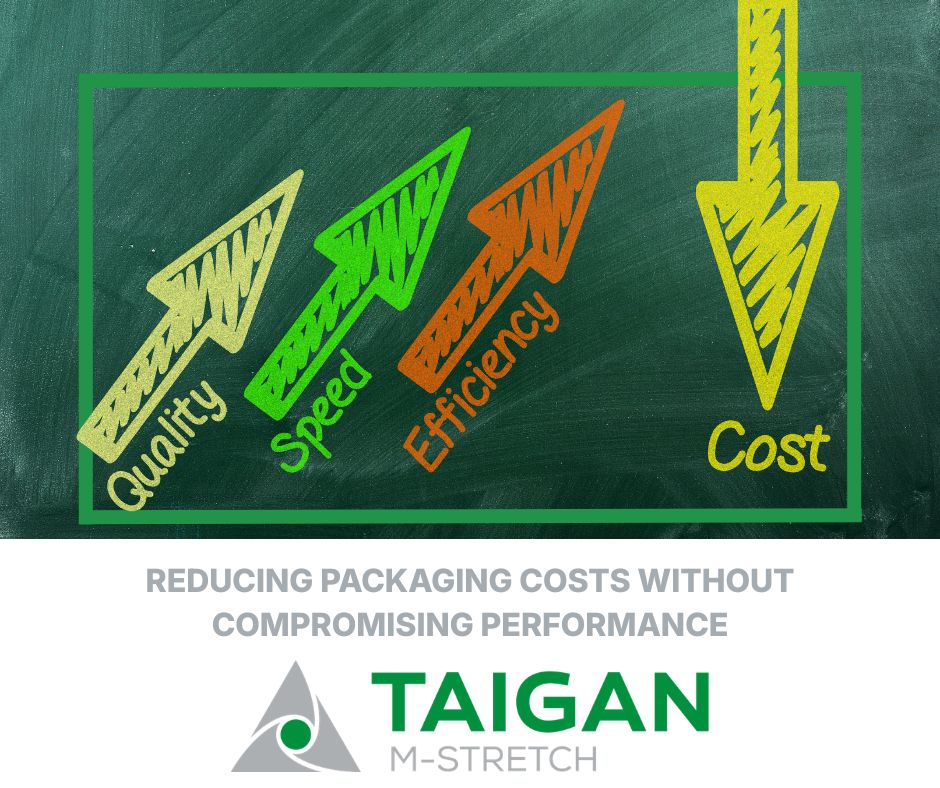
Reducing packaging costs requires analysing film performance, stretch ratios, wrapping techniques, and overall yield. When done correctly, businesses can achieve significant savings while improving pallet stability.
Let’s break down how this works in real-world operations.
The Hidden Cost of Over-Wrapping
One of the biggest barriers to reducing packaging costs is over-wrapping.
It happens quietly.
Operators add extra layers “just in case.” Film is wrapped thicker than necessary. Pallets are reinforced repeatedly because stability isn’t trusted.
Over time, this results in:
- Higher plastic consumption
- Increased purchasing volumes
- Greater storage requirements
- Elevated disposal costs
Over-wrapping feels safe. But it’s expensive.
Reducing packaging costs starts by identifying where film is being used unnecessarily.
Why Thicker Film Isn’t Always the Answer
Many companies believe heavier or thicker film will automatically stabilise loads better.
In reality, thickness alone does not guarantee performance.
High-quality stretch film with strong recovery properties can outperform thicker film while using less material.
Reducing packaging costs means shifting the focus from “more material” to “better performance per metre.”
This is where advanced pre-stretch technology changes the equation.
The Role of Pre-Stretch in Reducing Packaging Costs
Pre-stretch capability is one of the most effective tools in reducing packaging costs.
Film with 300% pre-stretch allows operators to:
- Wrap more pallets per roll
- Apply consistent tension
- Reduce operator strain
- Lower material consumption
Instead of pulling film manually to uncertain levels, pre-stretched film delivers predictable containment.
That predictability is where cost control begins.
Cost Per Roll vs Cost Per Pallet

Many purchasing decisions focus on price per roll.
But reducing packaging costs requires a different metric: cost per pallet wrapped.
If a cheaper roll:
- Breaks more often
- Requires additional layers
- Fails to stabilise loads
…it ultimately costs more per pallet.
High-performance stretch film reduces packaging costs by improving yield and reducing rework.
The true measurement is efficiency, not sticker price.
Yield Optimisation as a Cost Strategy
Reducing packaging costs depends heavily on yield analysis.
Yield answers questions like:
- How many pallets are wrapped per roll?
- How much film is used annually?
- Where is overuse happening?
- How much film is wasted due to breakage?
Through proper evaluation, businesses often discover significant optimisation opportunities.
Small adjustments in wrapping patterns or stretch ratios can reduce annual film usage dramatically.
Film Breakage and Operational Disruption
Every time stretch film breaks:
- The pallet must be rewrapped
- Productivity slows
- Material usage increases
- Labour costs rise
Reducing packaging costs means choosing film that maintains edge integrity and stretch recovery.
Folded-edge reinforcement in modern stretch film reduces tearing during application.
Less breakage equals less waste.
Reducing Damage Costs Through Better Containment
Unstable pallets create hidden expenses:
- Damaged goods
- Replacement shipments
- Customer dissatisfaction
- Increased insurance claims
Reducing packaging costs isn’t just about film consumption — it’s also about preventing loss.
Strong load containment reduces movement during transport, protecting inventory from vibration and impact.
Better stability equals lower damage-related expenses.
Operator Training and Cost Control

Even the best film can be misused.
Reducing packaging costs requires:
- Correct wrapping techniques
- Consistent stretch application
- Controlled film tension
- Standardised wrapping procedures
Without training, over-wrapping becomes habitual.
Optimisation involves both material and method.
The “Less Is Best” Principle in Cost Reduction
The concept behind reducing packaging costs is simple: use only what is necessary.
“Less Is Best” does not mean cutting corners.
It means:
- Optimising stretch ratios
- Eliminating unnecessary layers
- Using stronger film instead of thicker film
- Monitoring annual consumption
When film is applied strategically, containment improves while material usage decreases.
Annual Savings Add Up Quickly
Let’s look at scale.
In high-volume operations using over a million kilograms of stretch film annually, even a 10% reduction results in substantial savings.
Reducing packaging costs through yield optimisation can:
- Lower annual procurement budgets
- Free up warehouse space
- Reduce waste handling
- Improve cost predictability
These savings often reach seven figures in large operations.
And they are recurring.
Reducing Packaging Costs in High-Volume Environments
Large distribution centres wrap hundreds or thousands of pallets daily.
In these environments, minor inefficiencies multiply rapidly.
Reducing packaging costs requires:
- Strong recovery tension
- Consistent cling performance
- Minimal film breakage
- Efficient wrapping cycles
Film must perform reliably under pressure.
Operational speed should not compromise containment strength.
Why Technical Analysis Matters
Guesswork does not reduce expenses.
Reducing packaging costs requires measurable evaluation.
Performance analysis can include:
- Monitoring kilograms used per annum
- Comparing film grades
- Testing stretch ratios
- Evaluating pallet stability
With data-driven insights, businesses make informed adjustments rather than reactive changes.
Long-Term Strategy vs Short-Term Savings
Switching to a cheaper film may lower immediate purchasing costs.
But long-term stability depends on:
- Consistent performance
- Reduced damage claims
- Lower rework rates
- Controlled annual usage
Reducing packaging costs is a strategic decision, not a short-term reaction.
The goal is sustainable efficiency.
The Bigger Picture of Operational Efficiency
Packaging interacts with multiple departments:
- Procurement
- Warehousing
- Transport
- Quality control
- Finance
Reducing packaging costs improves alignment across all these areas.
When film performs consistently:
- Operations run smoother
- Downtime decreases
- Budget forecasting improves
- Damage claims decline
Packaging becomes an efficiency driver instead of a cost burden.
Conclusion
Reducing packaging costs is not about cutting corners. It’s about making smarter containment decisions.
By focusing on:
- Pre-stretch capability
- Yield optimisation
- Controlled wrapping techniques
- Strong load stability
- Measurable performance tracking
…businesses can reduce annual film consumption while maintaining — or even improving — pallet security.
In high-volume industrial environments, packaging efficiency directly influences profitability.
When stretch film performance is optimised and material use is controlled, reducing packaging costs becomes a predictable, repeatable strategy rather than a reactive measure.
The strongest cost savings come from performance-driven containment — not from using more material, but from using the right material correctly.