
Introduction
Packaging plastics are a foundational component of modern supply chains. From warehouses to distribution centres, plastic-based containment systems ensure that products move safely, efficiently, and predictably.
When businesses evaluate packaging plastics, they often focus on price per roll. But performance, stability, and yield matter far more in high-volume operations.
At Taigan, packaging plastics are engineered for measurable results. Through advanced stretch film technology and precision manufacturing, Taigan delivers containment solutions that strengthen pallet integrity while optimising material use.
This article explores how packaging plastics function in industrial environments, why performance metrics matter, and how Taigan approaches plastic packaging with a performance-first mindset.
The Role of Packaging Plastics in Industrial Operations

Packaging plastics are not simply protective layers. They act as structural reinforcement systems for palletised goods.
Effective packaging plastics must:
- Bind products securely to pallets
- Maintain tension during transport
- Resist tearing during application
- Recover after stretch
- Provide consistent cling
Without reliable packaging plastics, operations experience product damage, unstable loads, and unnecessary cost escalation.
Why Performance Matters in Packaging Plastic

Not all packaging plastic are created equal.
High-performance stretch film offers:
- Better load containment
- Greater stretch capability
- Stronger edge durability
- Controlled recovery tension
Low-grade film often requires extra wrapping layers, increasing material use without improving stability.
In fast-moving distribution environments, packaging plastics must deliver predictable performance every time.
Stretch Film as the Core of Modern Packaging Plastic
Stretch film remains one of the most efficient forms of packaging plastic in industrial environments.
Its advantages include:
- Adaptability to irregular loads
- Strong pallet compression
- Clear visibility of goods
- High-speed application compatibility
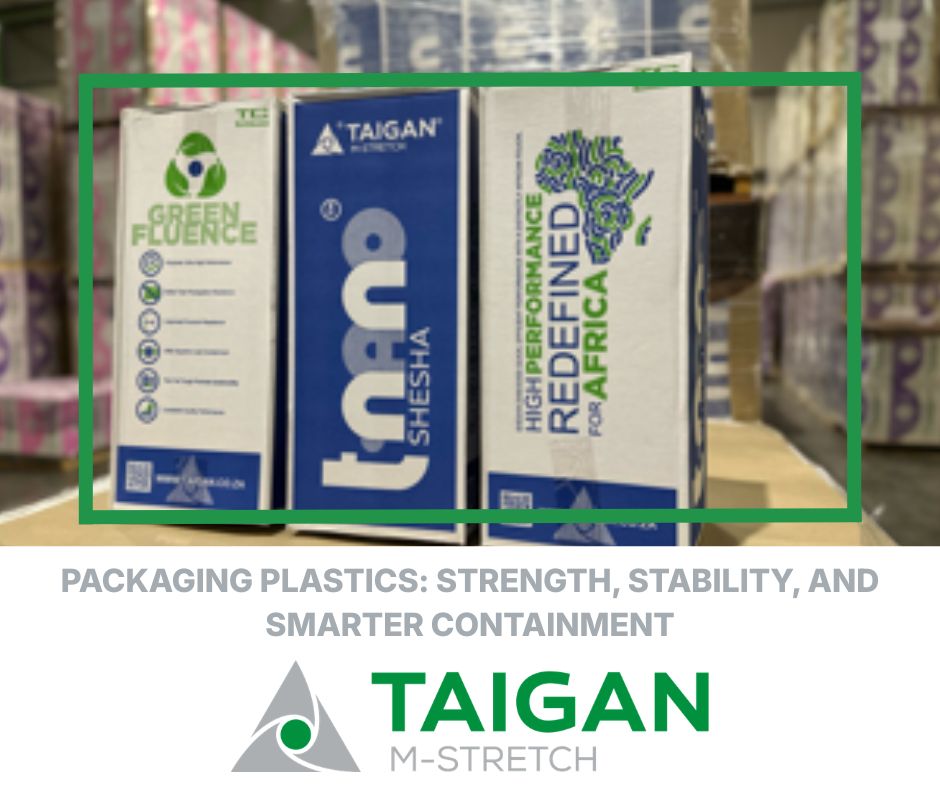
Taigan’s T.Nano stretch film represents an evolution in packaging plastics by combining advanced nano extrusion with measurable stretch efficiency.
300% Pre-Stretch Capability in Packaging Plastic
Pre-stretch technology has transformed how packaging plastic are applied.
With 300% pre-stretch capability, film can:
- Cover more surface area per roll
- Reduce operator effort
- Improve tension consistency
- Lower annual plastic consumption
This creates a controlled wrapping system rather than a manual force-based process.
Businesses that optimise stretch ratios achieve stronger pallets with less film.
Load Stability and Packaging Plastic

Load stability determines whether packaging plastic are truly effective.
A stable pallet should:
- Withstand forklift handling
- Resist vibration during long-distance transport
- Maintain structural shape under stacking pressure
- Prevent lateral product movement
Stretch film with strong recovery properties reinforces the pallet structure.
Packaging plastics must work as a containment system, not just a surface wrap.
Measuring Efficiency in Packaging Plastic
The true cost of packaging plastics is measured by:
- Kilograms used per year
- Cost per pallet wrapped
- Yield per roll
- Film break frequency
Through yield analysis and performance monitoring, Taigan helps businesses identify overuse patterns and optimise wrapping techniques.
In large-scale operations, small efficiency improvements result in substantial annual savings.
Common Mistakes in Using Packaging Plastic
Many facilities unknowingly misuse packaging plastics.
Common issues include:
- Over-wrapping
- Inconsistent tension
- Using thicker film instead of stronger film
- Poor wrapping patterns
These mistakes increase material costs without improving containment.
Optimised packaging plastics rely on:
- Correct stretch ratios
- Film compatibility with wrapping systems
- Consistent application standards
Packaging Plastic in High-Volume Warehousing
Gauteng and other industrial regions rely heavily on packaging plastic to support:
- Fast-moving consumer goods
- Industrial components
- Heavy manufacturing outputs
- Distribution centre throughput
High-volume operations require packaging plastics that perform under pressure.
Film must maintain recovery tension even after long storage periods and repeated handling.
Compatibility Across Wrapping Systems
Modern packaging plastic must integrate seamlessly across:
- Manual wrapping stations
- Semi-automatic pallet wrappers
- Fully automated pallet systems
T.Nano stretch film ensures consistent performance across all application types.
This flexibility supports operations scaling up without changing containment materials.
The Financial Impact of Packaging Plastic Decisions
Packaging plastic influence multiple cost areas:
- Procurement costs
- Damage-related losses
- Operational downtime
- Labour efficiency
- Waste management
Choosing performance-driven packaging plastics reduces indirect costs that are often overlooked.
Optimised film selection improves both operational and financial stability.
The “Less Is Best” Approach to Packaging Plastic
More plastic does not equal better protection.
The “Less Is Best” philosophy focuses on:
- Using the correct film grade
- Stretching to optimal levels
- Reducing unnecessary layering
- Maintaining uncompromised stability
This approach ensures packaging plastics deliver maximum containment with controlled usage.
Efficiency is not about reducing performance — it is about eliminating excess.
Why Taigan Focuses on Measurable Containment
Among suppliers of packaging plastic, Taigan emphasises measurable improvement.
Performance analysis includes:
- Annual usage reviews
- Stretch ratio optimisation
- Yield tracking
- Cost-per-pallet evaluation
In one analysis, significant annual film reductions were identified without sacrificing load stability, demonstrating that packaging plastics can be optimised scientifically.
The Future of Packaging Plastic in Industrial Environments
As logistics volumes increase, packaging plastic must evolve.
Key trends include:
- Higher stretch capability
- Stronger multi-layer film construction
- Improved recovery performance
- Enhanced yield control
Advanced nano extrusion technology supports these developments, ensuring packaging plastic remain efficient and reliable.
Conclusion
Packaging plastic form the backbone of modern pallet containment systems. When engineered correctly, they provide strength, stability, and operational efficiency.
Taigan’s stretch film solutions demonstrate how packaging plastics can be optimised through:
- 300% pre-stretch capability
- Strong recovery tension
- Thin yet durable construction
- Yield monitoring and efficiency analysis
- Compatibility with all wrapping systems
In high-volume industrial environments, packaging plastics must do more than wrap, they must reinforce, stabilise, and protect.
When containment performance matters, the right packaging plastics make all the difference.

